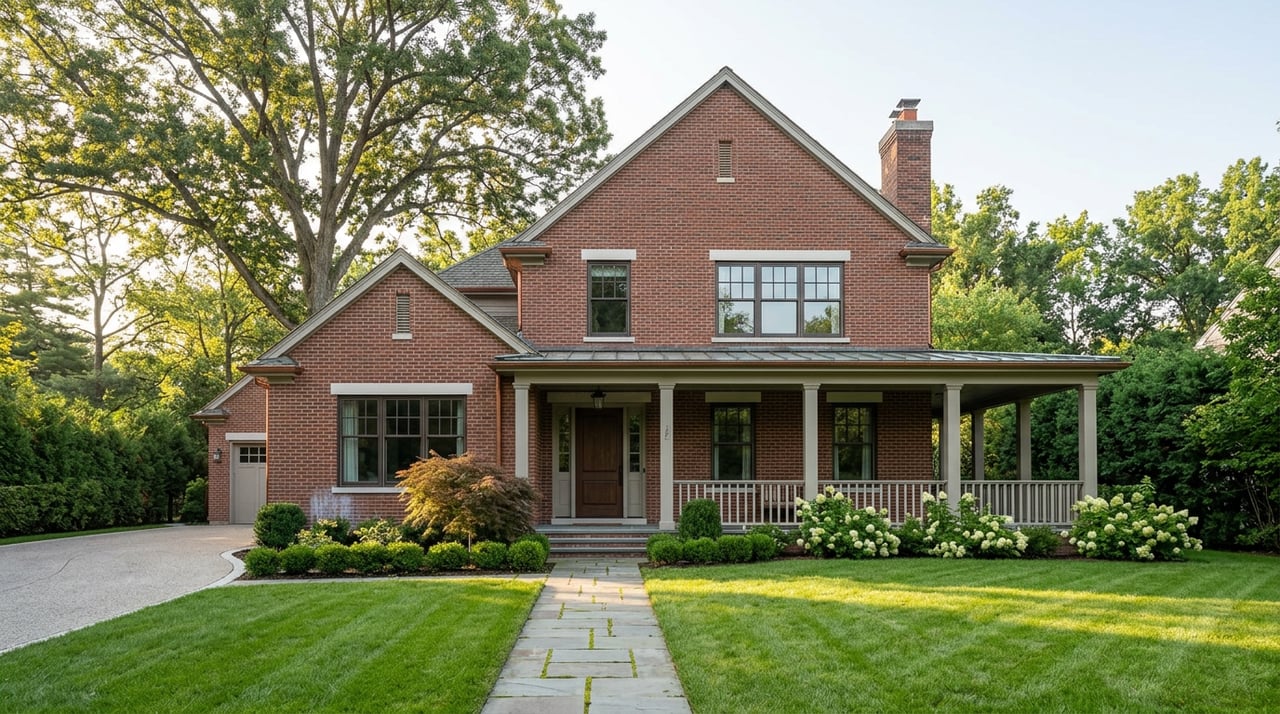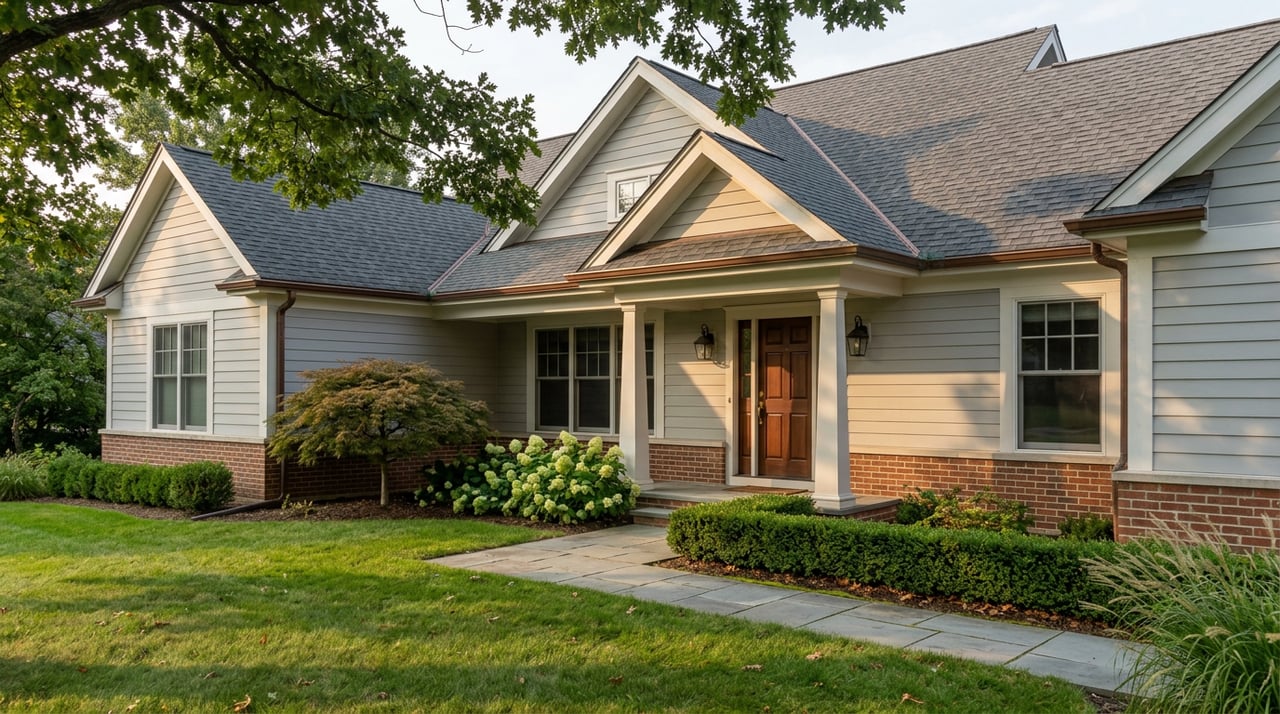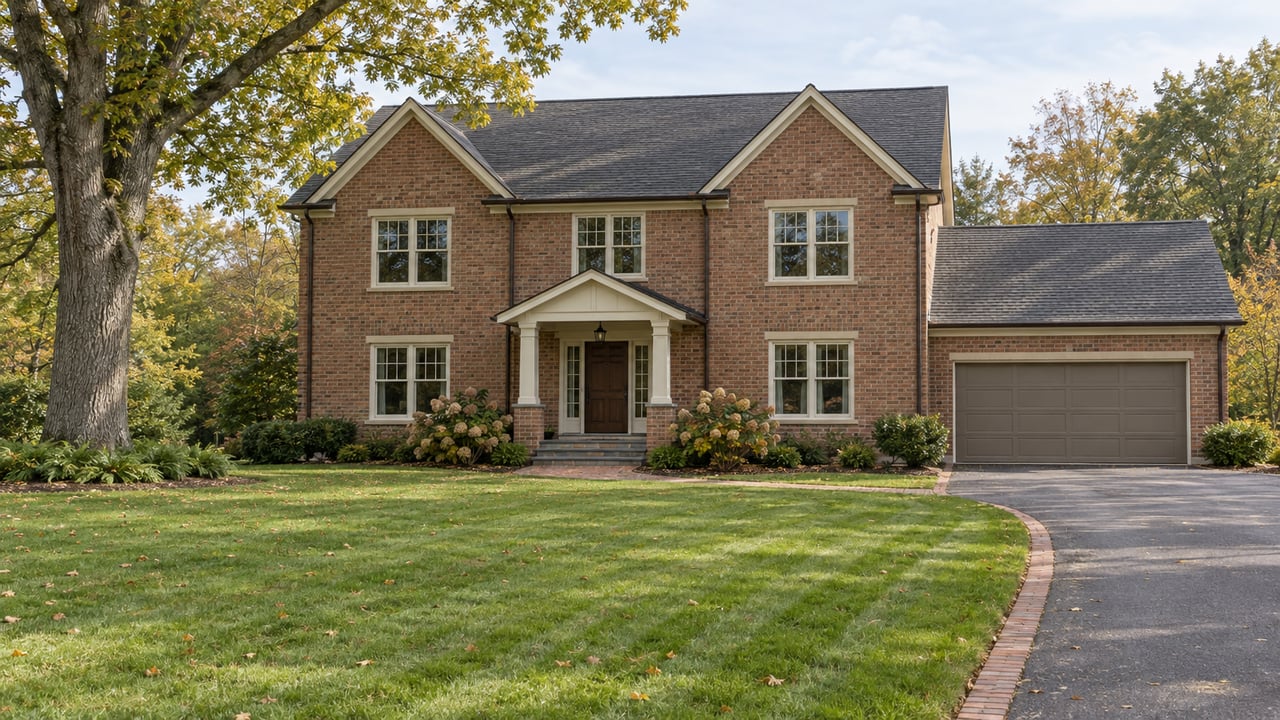
Two vacant one-acre lots face each other across Ridge Drive in North Glen Hills. Both are zoned RE-1, and the county could not approve a conventional septic system on either one. When the county tested 13211 Ridge Drive in April 2024, it found groundwater at 12 inches, too shallow to allow any further septic testing. The packet notes that DPS could not permit a new septic system there because of the high water table. The lot across the street, 13208 Ridge Drive, failed its percolation test. The Department of Permitting Services confirmed it cannot meet septic standards because of landscape and setback limits on the site. Both owners asked to move from sewer category S-6, which means no planned public sewer, to S-3, which opens the door to service. In March 2025, the County Executive recommended approving one with conditions and denying the other.
Neither lot's soil decided its outcome. What mattered was whether a sewer main could reach the lot along a public street. For anyone buying, selling, or holding land in Potomac's septic areas, that point matters more than any perc result.
Both properties have Rockville mailing addresses. County documents place them in the Glen Hills Study Area of the 2002 Potomac Subregion Master Plan, and that plan's rules govern them.
Two Lots, One Street, Different Paths
The county's March 2025 transmittal packet sets out both cases in detail. You can read it on the Montgomery County website.
| 13211 Ridge Drive | 13208 Ridge Drive | |
|---|---|---|
| Septic obstacle | Groundwater at 12 inches | Failed perc test; landscape and setback limits |
| Earlier history | Denied a category change by the Council in 2007 | Part of a 2002 request by 22 owners covering 27 properties, denied |
| Owner's proposal | Connect through a neighbor's easement to a 1991 low-pressure main on Valley Drive | Public sewer to allow a new house |
| Executive recommendation, March 2025 | Approve S-3 if WSSC extends a main within the public right-of-way | Deny; keep S-6 |
| T&E Committee, June 23, 2025 | Conditional approval, with a main extension along Ridge Drive | Conditional approval, only if that same extension is built and abuts the lot, with one connection |
The Council's Transportation and Environment Committee packet shows how the second lot's prospects changed. It depended on the first lot getting its main. The Council's July 15, 2025 agenda listed both cases for final action. The materials we reviewed show the committee's recommendations, not the final vote.
The Five Doors in Glen Hills
The reason is a policy the County Council adopted in March 2016 as Resolution 18-423. It came after a county study of how well soils across Glen Hills suit septic systems. The policy makes individual on-site septic systems the primary way RE-1 homes in the area handle wastewater. Public sewer can be considered in only five situations:
- A property needs relief from public health problems caused by a documented septic system failure.
- The property is inside a specifically designated special sewer service area.
- The property satisfies the abutting mains policy.
- The property sits at the edge of the Potomac Subregion sewer envelope and satisfies the Potomac Peripheral Sewer Service Policy.
- The property meets the Piney Branch restricted sewer service policy.
A failed perc test is not on that list. Planning staff reviewing 13211 Ridge Drive wrote:
"The property does not have a documented septic system failure (there is no system currently on the property)."
The first door is meant for homes with a system that has failed, not for land that never had one. So a vacant lot with poor soil has to come through doors three or four, and both depend on where pipe can be laid.
Why the Street Beats the Easement
The owner of 13211 Ridge Drive had a reasonable plan on paper. The rear of the lot backs to a property on Valley Drive, which is served by a low-pressure sewer main installed in 1991. The owner said they could obtain an easement from that neighbor for a direct connection. WSSC Water confirmed the main had enough capacity for another house.
The county turned it down anyway. Under the Potomac Peripheral Sewer Service Policy, a qualifying property has to abut or face the planned sewer envelope and be served by extensions within public rights-of-way. A connection through a private easement does not count, even when the main has spare capacity. The approval path that remained was a new main running along Ridge Drive from the intersection of Watts Branch Drive and Circle Drive.
That same pipe is the only reason 13208 Ridge Drive has a path. If the main is built, it would abut the lot across the street, which would make it eligible under the abutting mains policy. The county's own review shows how much work that involves. WSSC Water sketched a possible 1,600-foot extension using a high-maintenance pressurized line. DEP staff confirmed a stream channel on 13208 during a site visit. The owner would also have to request a Hydraulic Planning Analysis from WSSC before anyone could say whether the alignment works.
For a buyer, a vacant Glen Hills lot that fails septic testing may still become buildable. That depends on a public main getting built along the street, on a schedule nobody controls. Its value carries that uncertainty.
When the Home Already Has a System
For an existing house, the first door matters most. Sewer can be considered for a property with a septic failure documented by the Department of Permitting Services. The county's August 2026 draft plan shows a request of this kind still pending. A sewer category change for 12720 Piney Meetinghouse Road, sought to address a failed septic system, appears as deferred.
Most failing systems go to repair. Montgomery County requires a septic repair permit, with an on-site evaluation and inspections before and after installation. The county's well and septic fee schedule for July 1, 2026 through June 30, 2027 lists the following fees:
- Individual sewage disposal permit: $1,492.47
- Repair permit: $466.40
- Conventional perc test: $970.11 per lot, per visit
- Water-table check: $547.24 per visit
Those are the county's permit fees. Design and construction are separate costs. The University of Maryland Extension says septic systems typically last 20 to 30 years. It names surfacing effluent, backups, slow drains, alarms, and foul odors as warning signs. It also notes that a tank and a drainfield can fail independently, so replacing one doesn't always mean replacing both. Extension puts typical pumping at $250 to $400, depending on tank size and location.
The county's guidance for homeowners recommends having a septic system inspected and pumped every two to five years.
The Well Test That Now Sits Before Settlement
Water works differently. Since October 1, 2024, Maryland law has required a sale contract for a home with a private drinking water well to make the buyer responsible for getting the water tested. Settlement cannot happen until both buyer and seller have received and reviewed the results, and both certify that in writing at closing. The buyer can waive the test in writing, and results are valid for three years. The minimum test uses a state-approved sampler and laboratory and checks for bacteria, nitrate, and turbidity. The Maryland Department of Health lists lab fees of $41, $18, and $15 for those three tests.
The three-year validity matters for timing. A seller who tested in late 2023 or later may already have results that still count. The test list may also get longer. The Private Well Safety Act directs the Maryland Department of the Environment to adopt more county- or area-specific standards by December 31, 2026. Contaminants under consideration include manganese, arsenic, radon, mercury, and regulated volatile organic compounds. We have not confirmed whether those rules have been proposed yet.
October 27, and What the Council Is Weighing
All of the above sits inside the county's Comprehensive Water Supply and Sewerage Systems Plan, and that plan is being rewritten now. According to the Department of Environmental Protection's schedule, the Council held its public hearing on September 29. A full Council work session follows on October 20, with resolution action set for October 27. The current Council's authority to approve the plan ends October 31 because of the county-wide election.
The August 25, 2026 Executive Draft keeps the Glen Hills framework. It drops mandatory septic pump-outs. Instead, it proposes a fiscal year 2027 pilot rebate for tanks pumped at least once every five years. The Council staff memo raises two questions for Potomac. One is whether the peripheral policy, which now exists only in the Potomac Subregion, should apply in other parts of the county. The other is Palatine. That subdivision has been left out of the peripheral policy because of assumed limits on its low-pressure sewer system. A WSSC study found the system could take a limited number of connections from adjacent properties without major changes, but allowing them would require revising the policy. These items are drafts and discussion points until the Council votes.
A Few Direct Questions
Does a Potomac address mean septic? No. Water and sewer categories are assigned parcel by parcel, and a property's water and sewer categories can differ. The Ridge Drive lots, for example, are W-3 for water and S-6 for sewer.
Which Potomac areas carry special sewer rules? County planning documents name several. Fox Meadow, Carrs Addition, and Potomac Manor Section 2 are covered by the Riverwood Drive policy south of River Road. The Piney Branch subwatershed, Palatine of Potomac, and Greenbriar are excluded from the peripheral policy. Part of the South Overlea Drive survey area is so far the only approved special sewer service area in Glen Hills.
Does the new well test apply if the buyer waives it? The law allows the buyer to waive the sale-related test in writing.
If you own a Potomac home or lot on well or septic and want to understand its service category, recent testing, and what a buyer will ask about, The Schuman Team can walk through it with you before you list. Get your home's value and a clear read on the parcel underneath it.
This article is general information, not legal, tax or financial advice. Consult a qualified professional about your situation.