Buyers moving into Washington from Bethesda or Arlington usually cross the District line holding onto one assumption about single-family homes: no basement tenant, no problem, none of the tenant purchase rights that make DC apartment building sales famously slow. That assumption has been mostly correct since 2018, according to the DC Office of the Tenant Advocate. Mostly is doing a lot of work in that sentence, and mostly is exactly where a closing can stall if the wrong box gets checked on a form nobody reads until a title company calls asking for it.
Here is the claim worth sitting with before you write an offer on a DC rowhouse with a rented basement, a carriage house, or a garage apartment: whether the Tenant Opportunity to Purchase Act applies to your purchase does not depend on whether the home looks like a single-family house. It depends on a legal definition of what that basement unit actually is, and that definition just got more consequential, not less, after the District's biggest TOPA overhaul in years took effect on December 31, 2025, as Ballard Spahr reports.
The 2018 rule most people half-remember
The Tenant Opportunity to Purchase Act has been on DC's books since 1980, part of the Rental Housing Conversion and Sale Act. In plain terms, TOPA gives tenants the first chance to buy the building they live in before an owner sells to anyone else, as the DC Department of Housing and Community Development explains.
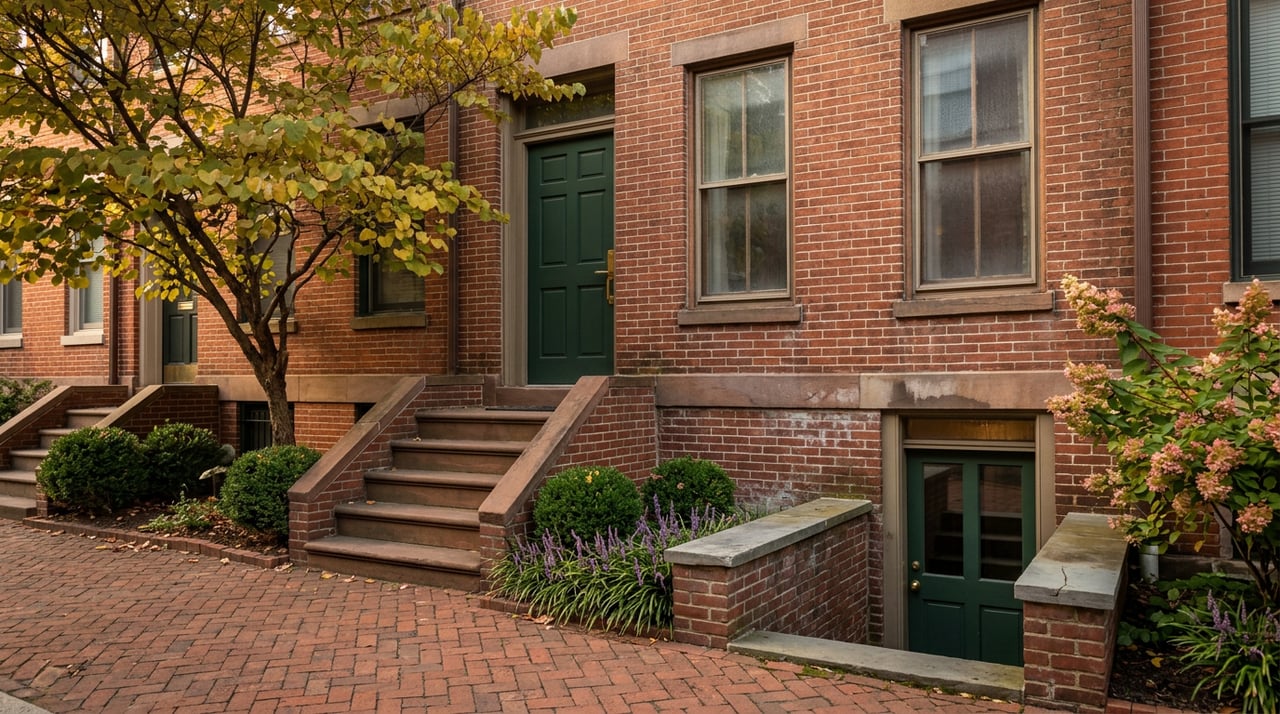
For decades, that rule technically reached single-family homes too, which meant a homeowner renting out a basement apartment carried real tenant purchase rights on the title, whether they knew it or not. The District fixed that with the TOPA Single-Family Home Exemption Amendment Act, effective July 3, 2018. Under the fix, a single-family accommodation with an accessory dwelling unit, defined by Federal Title's guidelines as a basement apartment, carriage house, or similar unit that is secondary to the main home in size and use and has its own kitchen and bath, no longer carries a tenant's right of first refusal.
There is one carve-out that has quietly survived every round of TOPA reform since: a tenant who is 62 or older, or has a disability, and who signed a lease by March 31, 2018 and moved in by April 15, 2018, keeps TOPA rights for as long as that tenancy continues. Eight years on, that population is shrinking, but it has not reached zero. And even for fully exempt properties, the notice obligation never went away. An owner who receives or solicits an offer to purchase still has to deliver written notice to any tenant within three calendar days.
Why "single-family" is a legal category, not a description
Here is where buyers and even some agents get tripped up. The exemption only covers a true single-family accommodation, meaning the secondary unit is subordinate in floor area, intensity of use, and physical character to the main home. A basement apartment that fits that description is exempt. A rowhouse that has been converted into two roughly equal units, each with its own full living space, is a different legal animal entirely, and it was never covered by the 2018 fix.
The RENTAL Act changed the rules for that second category, true 2-4 unit buildings. It also exempts buildings less than 15 years old, applied retroactively, so a building that received its certificate of occupancy ten years ago is exempt for another five, according to Arnold Porter.
A buyer evaluating a converted duplex rather than a single-family home with an accessory unit needs to confirm whether the property qualifies for the 15-year exemption before going under contract, not after.
| Single-family home with ADU (English basement, carriage house) | True 2-4 unit rowhouse | |
|---|---|---|
| TOPA status before 2018 | Subject to TOPA | Subject to TOPA |
| TOPA status today | Exempt, except legacy elderly/disabled tenants from 2018 | Exempt if the certificate of occupancy was issued within the last 15 years |
| Notice still required | Yes, within 3 calendar days of an offer | Yes |
| Who confirms status | Title company, DHCD | Title company, DHCD |
The classification confusion is not hypothetical right now
According to reporting from The 51st in August 2026, the District's housing officials are still working through disputes about what counts as exempt under the RENTAL Act's new construction language. The report documented tenant advocates and title professionals flagging cases where owners of older, rent-controlled buildings renovated the property and then marketed it as new construction to claim the 15-year exemption amid ambiguity in DHCD's guidance. One DC real estate and title attorney quoted in that report summed up the shift bluntly: whatever people thought of the old TOPA rules, at least everyone knew how they worked.
That quote is really about predictability, and predictability is the thing a buyer under contract cares about most. A property that gets miscategorized, even briefly, can mean a delayed offer of sale notice, a tenant association forming late in the process, or a title company holding up closing until DHCD confirms exemption status in writing. None of that is likely on a straightforward single-family home with a basement rental. It becomes a live possibility the moment the property is a converted multi-unit rowhouse.
What actually happens at the closing table
For a genuinely exempt single-family accommodation, the paperwork is still real, just faster:
- The seller gives the tenant written notice within three calendar days of a solicited or received offer.
- The tenant has 20 days to respond. Silence is treated as a waiver of any TOPA rights.
- If a tenant does claim elderly or disabled status under the 2018 grandfather clause, the process shifts to the fuller TOPA timeline.
For a true 2-4 unit building, verify whether the 15-year exemption applies before going under contract.
The income math this affects, not just the calendar
None of this is only a legal curiosity. A well-configured English basement in DC can rent for well over $2,500 a month, real income that factors into how a buyer prices the carrying cost of a larger purchase. That income only pencils out on the timeline a buyer expects if the closing itself does not get pulled sideways by a tenant notice question that should have been resolved during due diligence, not during attorney review.
For anyone evaluating a home in Palisades, Spring Valley, American University Park, or Chevy Chase DC with an existing rental unit, the useful question to ask before writing an offer is simple and specific: is there a current tenant, and if so, is this legally a single-family accommodation with an accessory unit, or a true multi-unit building. That single answer helps clarify what paperwork may apply, what timing to expect, and whether the seller's paperwork is already in order.
A few questions worth asking directly
Does TOPA apply to a condo I am buying in DC? Confirm the status for the specific property before relying on an exemption.
What if the seller says the tenant already waived their rights? Ask to review the written documentation with a qualified title professional before closing.
Does any of this affect financing or my closing date? It can affect timing if the tenant's status or the property's exemption status is unclear.
This kind of DC-specific fine print is exactly the reason a local guide matters more than a national one. If you are weighing a Washington property with a rental unit against options in Potomac, Bethesda, or Chevy Chase, Maryland, The Schuman Team can walk through what the paperwork actually looks like for that specific property before you write an offer. Get Your Home's Value and let's talk through what a smooth closing looks like on your timeline.
This article is general information, not legal, tax or financial advice. Consult a qualified professional about your situation.